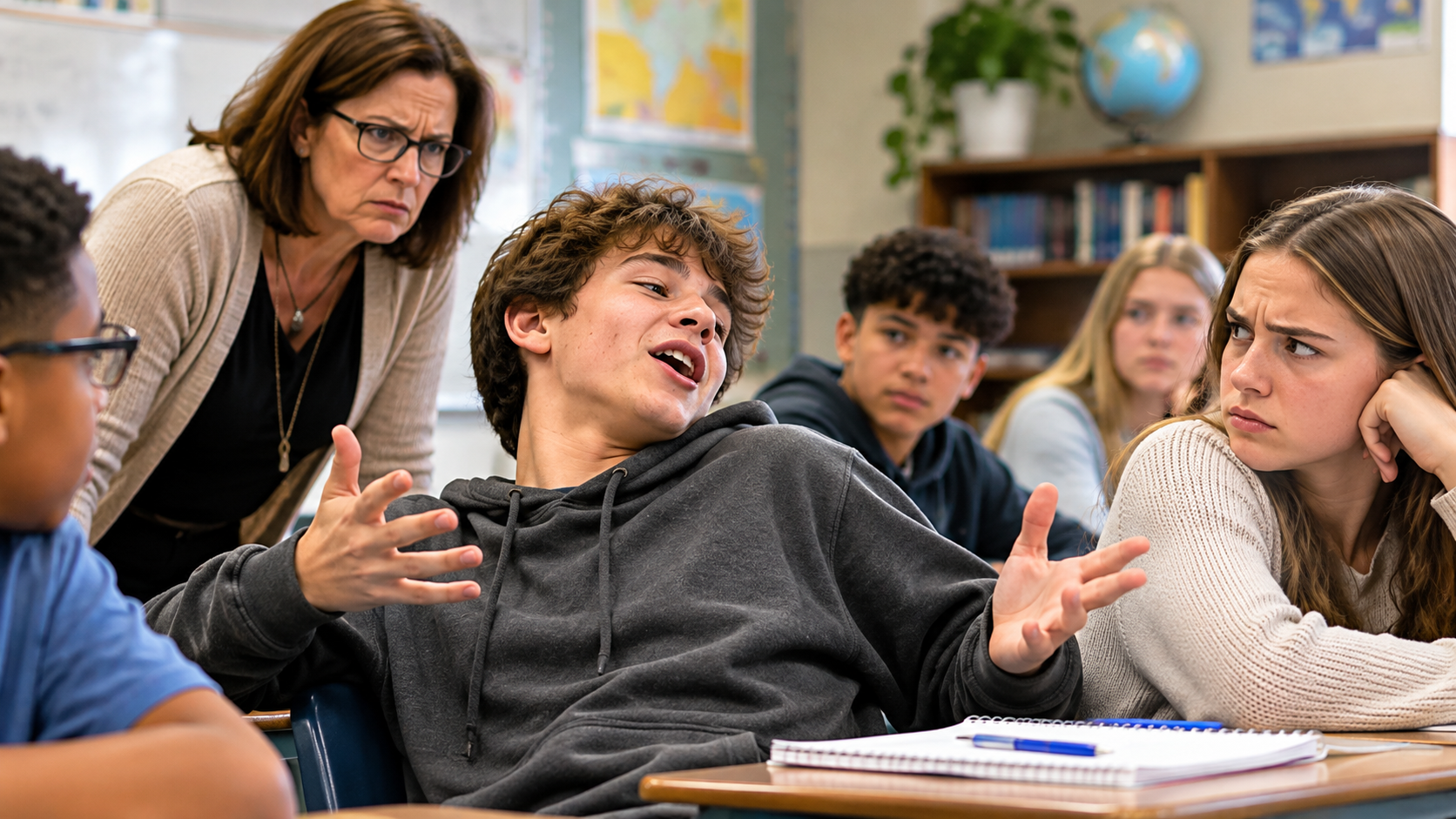

You’re explaining an important concept when a student blurts out a question.
Another student starts talking, and suddenly you’ve lost everyone’s attention.
Additionally, this situation highlights students interrupting lessons as one of the most frustrating classroom management challenges for first-year teachers.
However, the solution isn’t necessarily stricter punishment or raising your voice. It’s teaching students interrupting lessons when and how to participate while maintaining a productive learning environment.
Table of Contents
Toggle1. Teach What Appropriate Participation Looks Like
Don’t assume students automatically understand classroom expectations.
Demonstrate the difference between raising a hand, waiting for acknowledgment, and interrupting someone who’s speaking.
Practice these behaviors during low-pressure activities. When students know exactly what successful participation looks like, they’re better prepared to demonstrate it.
2. Stop Competing With Student Conversations
When students interrupt, many teachers instinctively speak louder.
Unfortunately, this can turn classroom instruction into a competition for attention.
Instead, pause briefly, use your established attention signal, and wait for students to respond.
Consistency matters more than volume.
If you repeatedly continue teaching while students talk, you may unintentionally communicate that interruptions are acceptable.
3. Give Students Structured Opportunities to Talk
Sometimes students interrupt because they’re eager to contribute. Other times, they’re disengaged or seeking attention.
Build brief opportunities for discussion into your lessons.
Try asking students to think independently, discuss their ideas with a partner, and then share with the class.
These structured conversations provide an appropriate outlet for participation while keeping instruction moving.
4. Respond Calmly and Redirect Immediately
When students interrupt lessons, your response can either reduce or intensify the disruption.
Avoid lengthy public lectures or arguments.
Instead, use a calm, direct statement:
“Hold that thought. You’ll have an opportunity to share in a moment.”
For repeated interruptions, privately reteach expectations and determine whether the student needs additional support.
The goal is to correct the behavior without embarrassing the student or disrupting everyone else’s learning.
5. Reinforce the Behavior You Want Repeated
Students need feedback when they demonstrate appropriate participation.
Acknowledge specific behaviors rather than offering vague praise.
For example:
“I appreciate how you waited until your classmate finished speaking before sharing your idea.”
This reinforces respectful communication and helps students recognize what successful participation looks like.
The IRIS Center at Vanderbilt University offers additional evidence-informed resources on classroom behavior and instructional practices. https://iris.peabody.vanderbilt.edu/
Your Classroom Doesn’t Need to Be Silent
A productive classroom includes questions, discussion, collaboration, and occasional excitement.
The objective isn’t eliminating student voices. It’s teaching students to participate without interfering with learning.
If you’re struggling with students interrupting lessons, begin with one strategy this week. Teach the expectation, practice it consistently, and reinforce improvement.
Small instructional adjustments can produce meaningful changes over time.
For additional practical classroom management strategies designed for beginning teachers, explore Teacher Classroom Resources.
Remember: Effective classroom management isn’t about controlling every conversation. It’s about creating an environment where everyone has an opportunity to learn and be heard.